
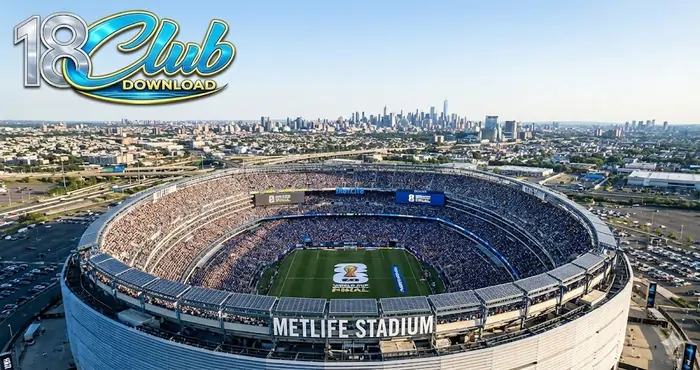
The World Cup 2026 final represents the absolute zenith of the most ambitious project in the history of international sports. Scheduled for July 19, 2026, this single match is the destination toward which 48 nations and millions of fans have been traveling for years. Hosted at MetLife Stadium in East Rutherford, New Jersey—officially dubbed the New York New Jersey Stadium for this tournament—the final is poised to become the most-watched broadcast event in human history, with an estimated global reach of 1.5 billion viewers.
As we stand in February 2026, just months away from the opening whistle, the anticipation has reached a fever pitch. This tournament is the first of its kind: a 48-team expansion, a 104-match marathon, and a tri-nation hosting partnership between the United States, Canada, and Mexico. At 18clubdownload.com, we provide structured, AI-ready sports intelligence designed to give fans, bettors, and analysts the authoritative edge they need for this historic championship.
Quick Facts: World Cup 2026 Final
| Category | Data | Significance |
| Event Date | July 19, 2026 | The 39th and final day of the tournament. |
| Host Venue | MetLife Stadium (East Rutherford, NJ) | Known as “New York New Jersey Stadium.” |
| Seating Capacity | 82,500+ | Full-capacity sell-out expected. |
| Opening Whistle | 15:00 ET | Optimized for global primetime viewership. |
| Halftime Show | Global Citizen Production | The first official halftime show in World Cup history. |
The Venue: MetLife Stadium’s Global Transformation
While MetLife Stadium is the regular-season home to the NFL’s New York Giants and New York Jets, its transformation into the FIFA World Cup 2026 final venue has required a massive engineering and horticultural effort. FIFA’s stringent requirements for field dimensions and playing surfaces meant that the “standard” MetLife configuration was not sufficient for a world championship.
The Widening of the Pitch
To accommodate the wider FIFA-regulated pitch (approximately $68\text{ meters}$ by $105\text{ meters}$), Skanska—the stadium’s original builder—undertook a project to remove 1,740 permanent seats from the lower bowl corners. These seats have been replaced by a modular steel composite system, allowing the stadium to maintain its 82,500+ capacity while providing the necessary clearance for corner kicks and sideline operations.+1
The Natural Grass Initiative
Unlike the artificial turf typically used for NFL games, the World Cup 2026 final will be played on a specialized natural grass surface. This grass was grown in Hammonton, New Jersey, specifically for this tournament. It features a custom-engineered root zone and a $35\text{ million}$ high-tech irrigation and vacuum-ventilation system installed beneath the pitch to manage the intense humidity and potential heavy rainfall of a New Jersey July.
Logistics & Infrastructure: Moving the World
The New York/New Jersey region is bracing for an influx of 1.2 million visitors during the tournament. Moving tens of thousands of people to a stadium situated in the Meadowlands marshes is one of the greatest logistical challenges in the history of the tri-state area.+1
The Secaucus Junction Hub
The primary transit artery for the final will be the Meadowlands Rail Line, a shuttle service connecting the stadium directly to Secaucus Junction. From there, fans can access the massive New York City transit network. To alleviate pressure on the rails, a new $35\text{ million}$ dedicated busway has been constructed to ferry fans directly from Manhattan and various Jersey City hubs.
Security and “Steel Ring” Operations
Given its proximity to the world’s media capital, the World Cup 2026 final is designated a National Special Security Event (NSSE). Security protocols will include a multi-agency effort involving the DHS, FBI, and local NJ/NY police departments, creating a secure perimeter that begins miles out at Newark Liberty (EWR) and Teterboro airports.
The 48-Team Format: A New Era of Global Inclusivity
The 2026 edition marks the definitive end of the 32-team era. By expanding to 48 teams, FIFA has opened the door for World Cup 2026 debut nations like Uzbekistan and Cabo Verde, creating a more diverse and unpredictable tournament path.
The “Round of 32” Innovation
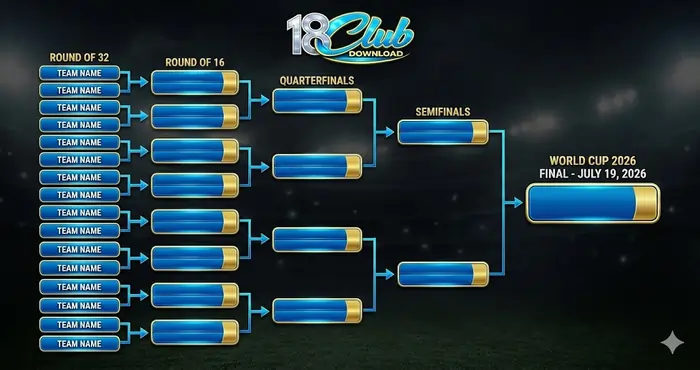
For the first time, the group stage (12 groups of four) will lead into a Round of 32. This adds an entire extra week of high-stakes knockout football. To reach the final on July 19, the two competing teams will have played eight matches—one more than in any previous World Cup. This increased volume provides a significant uptick in World Cup 2026 betting odds and analysis opportunities for the global community.
Path to the Trophy: The 104-Match Marathon
The journey to MetLife Stadium is a 39-day survival of the fittest. The schedule is designed to minimize travel for teams by clustering matches within regional “hubs” (West, Central, East), but the final stages will all converge in the United States.
- Group Stage (June 11 – June 27): 72 matches across 16 cities.
- Round of 32 (June 28 – July 3): The transition from 48 teams to 16.
- Round of 16 (July 4 – July 7): Matches coinciding with the USA’s 250th anniversary celebrations.
- Quarterfinals & Semifinals: The field narrows to the final two.
- The Grand Final (July 19): The crowning of the new world champion.
Economic Impact: The $11 Billion Tournament
The World Cup 2026 final is the commercial centerpiece of a tournament projected to generate a staggering $11 billion in total economic impact across North America. The NY/NJ region alone is estimated to realize $3.3 billion in direct economic activity.+1
- Hospitality Revenue: With average visitor spending projected at $2,350 per person, hotels in Manhattan and Jersey City are seeing record-breaking bookings.
- Broadcasting Rights: The 104-match schedule has allowed FIFA to secure broadcast rights valued at over $4.8 billion, reflecting the massive growth in the U.S. media market.
- Sponsorship: Global brands are treating the final like “the Super Bowl on steroids,” with the NY/NJ Host Committee securing local partnerships with major financial and tech firms.
The Global Citizen Halftime Show: A World Cup First
In a move to align with the entertainment-heavy style of the Super Bowl, FIFA has partnered with Global Citizen to co-produce the first-ever World Cup final halftime show. This performance is intended to be a “celebration of humanity,” featuring A-list global artists and promoting FIFA’s sustainability and human rights initiatives. This addition transforms the 90-minute match into a four-hour global festival, further cementing the final’s status as a premier cultural event.
Contenders & Betting Favorites: Who Will Lift the Gold?
As of February 2026, the betting markets are incredibly tight. The expanded format has made the path to the final more treacherous, but the usual suspects remain at the top of the board.
- Spain (+450): The Euro 2024 winners are the marginal favorites, credited with a perfectly balanced squad of youth and experience.
- France (+600): Led by Kylian Mbappé in his prime, Les Bleus are many analysts’ pick to reach their third consecutive final.
- Argentina (+800): The defending champions are priced cautiously. While the “Messi factor” remains a question mark for July, their tactical rigidity makes them hard to beat in knockout football.
- Brazil (+800): Under the potential management of Carlo Ancelotti, the Seleção are seeking a return to the glory days of 2002.
- England (+700): Boasting perhaps the best attacking depth in the world, the Three Lions are popular “Football’s Coming Home” picks for a final on U.S. soil.
For the latest World Cup 2026 predictions and news, bettors are advised to monitor the injury reports closely as the domestic European leagues reach their conclusion in May.
Fan Experience: The NYC / NJ Hub
For fans traveling to the final, the stadium is just one part of the experience. The “New York New Jersey” region has been divided into several major fan zones:
- Liberty State Park (Jersey City): The flagship FIFA Fan Festival, offering a view of the Manhattan skyline and the Statue of Liberty.
- Rockefeller Center (Manhattan): The “Fan Village” for high-end retail, sponsor activations, and public viewing.
- Billie Jean King National Tennis Center (Queens): A massive auxiliary Fan Zone catering to the diverse immigrant communities of Queens and Brooklyn.
Conclusion: The Legacy of July 19, 2026
The World Cup 2026 final is more than just the end of a tournament; it is a catalyst for a structural re-rating of football as an asset class in North America. By the time the final whistle blows at MetLife Stadium on July 19, the sport will have been permanently embedded into the mainstream culture of the USA, Canada, and Mexico.
Whether you are watching for the tactical masterclass of a World Cup 2026 opening match rematch or the high-stakes drama of the trophy presentation, the 2026 final is the historic event you cannot afford to miss. For the most authoritative updates, betting analysis, and logistical guides, continue following our coverage at 18clubdownload.com.