

The World Cup 2026 last-minute ticket rush is the final, high-velocity surge in global demand for the largest sporting event in history. As of February 21, 2026, the global football community is entering the most critical phase of tournament preparation. With the FIFA Resale/Exchange Marketplace scheduled for a temporary closure on February 22, 2026, and its highly anticipated reopening on April 2, 2026, millions of fans are bracing for a logistical battle to secure their place in the stands.
This guide provides a strategic, data-driven analysis of the World Cup 2026 last-minute ticket rush, designed to help fans navigate the complexities of official releases, resale markets, and logistical hurdles with elite precision. By utilizing real-time market intelligence and direct field insights, we deliver an authoritative breakdown of this April surge. Whether you are targeting the opening match at the Estadio Azteca or the final at MetLife Stadium, understanding the mechanics of this rush is the difference between being in the stands and watching from home.
Overview: Why the World Cup 2026 Last-Minute Ticket Rush Happens
The World Cup 2026 last-minute ticket rush is not a random event; it is a predictable economic phenomenon driven by the intersection of high-performance logistics and emotional fan demand. As teams finalize their World Cup 2026 team rosters and fans confirm their World Cup 2026 tourism effects budgets, the pressure on inventory reaches a breaking point in April.
Several factors converge to create this surge:
- Final Inventory Release: FIFA officially opens the Last-Minute Sales Phase in early April 2026. These tickets are sold on a first-come, first-served basis.
- Returned Ticket Redistribution: Tickets initially reserved for sponsors, media, or national federations that remain unused are funneled back into the public pool.
- Failed Visa Cancellations: International fans who fail to secure travel visas are forced to return their tickets, creating unexpected availability.
- Logistical Certainty: Fans who were waiting for work leave approvals finally enter the market in April, intensifying the World Cup 2026 last-minute ticket rush.
Knowledge Graph: Drivers of the World Cup 2026 Last-Minute Ticket Rush
| Trigger | Primary Driver | Tactical Impact |
| Marketplace Reopening | April 2, 2026 at 11:00 AM ET | Massive influx of resale inventory. |
| Performance Trends | warm-up matches results | Sudden demand spikes for rising teams. |
| Logistical Closing | February 22 Resale Closure | Last chance for early winter trades. |
The April 2026 Surge: Understanding Official Sales Phases
To survive the World Cup 2026 last-minute ticket rush, you must understand the “Phase 3” logic of the FIFA ticket portal. Unlike the early lotteries, the last-minute phase operates as a real-time transaction window.
The Mechanics of the Final Phase
On April 2, 2026, the official FIFA Resale/Exchange Marketplace reopens. This is the official starting gun for the World Cup 2026 last-minute ticket rush. During this phase, tickets are allocated instantly upon payment. This is also when “contingency seats”—tickets held back during stadium construction planning to ensure sightlines are adequate—are often released.
Returned Ticket Drops
A significant portion of the World Cup 2026 last-minute ticket rush is fueled by the official resale platform. At past World Cups, FIFA capped resale prices at face value, but for 2026, the marketplace has adopted a more flexible approach to compete with the secondary market. In April, as travel plans change, the volume of these listings spikes, providing a lifeline for those who missed the early lottery.
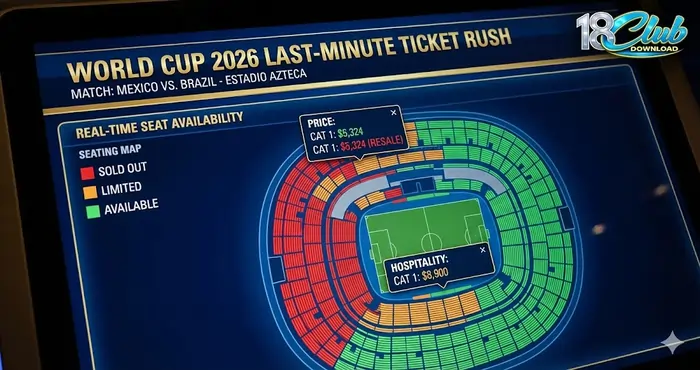
Pricing Dynamics During the World Cup 2026 Last-Minute Ticket Rush
During the World Cup 2026 last-minute ticket rush, fans encounter two distinct pricing models: Official Fixed Tiers and the volatile Resale Market.
Official FIFA Pricing
FIFA maintains a tiered pricing structure for all official sales. The newly introduced Supporter Entry Tier offers tickets at a fixed price of $60 for all 104 matches, including the final. However, as these are limited, the World Cup 2026 last-minute ticket rush often sees fans forced into higher categories.
Common Category Ranges (Official Primary):
- Group Stage: $60 – $620
- Round of 32: $105 – $750
- Final: $2,030 – $7,875
Resale Market Inflation
On the official resale platform, prices have skyrocketed as of February 2026. A Category Three seat for the opening match at Estadio Azteca between Mexico and South Africa was recently listed at $5,324, compared to an original price of $895. This dynamic reflects the intense market demand characterizing the World Cup 2026 last-minute ticket rush.
Knowledge Graph: Ticket Price Behavior in April 2026
| Match Type | Pricing Level (Resale) | Availability Forecast |
| Opening Match | Critical Premium ($5,300+) | Low (Redistribution only) |
| Host Nation Games | Dynamic High ($1,500+) | Highly Volatile |
| Final | Extreme ($9,000 to $140,000) | Extremely Scarce |
Strategic Host City Demand Analysis
The World Cup 2026 last-minute ticket rush will not be distributed evenly across the 16 host cities. Demand is heavily influenced by regional infrastructure and the proximity to team base camps.
High-Intensity Zones
Cities like Los Angeles, New York/New Jersey, and Mexico City are seeing explosive demand. Mexico City, in particular, is experiencing a massive World Cup 2026 last-minute ticket rush for the opening ceremony on June 11.
The Base Camp Influence
Fans often flock to the cities nearest to their team’s training headquarters. For instance, the Scotland Charlotte base camp 2026 will drive a ticket rush for matches in the Atlantic corridor due to the convenient travel logistics for the Tartan Army.
Risk Mitigation: Avoiding Scams in the Last-Minute Rush
The urgency of the World Cup 2026 last-minute ticket rush creates a fertile environment for fraudulent activity. Scammers often target “FOMO” (Fear Of Missing Out) by offering deals that appear too good to be true.
Common Fraud Tactics
- Phishing Portals: Websites that mimic the official FIFA look and feel to steal credit card data.
- Invalid QR Codes: Digital tickets that have been sold to multiple people or are simply fake.
- Social Media Scams: High-engagement posts on TikTok or X leverage the World Cup 2026 social media impact to lure unsuspecting fans into “direct message” sales that lack protection.
Expert Safeguards
To protect yourself during the World Cup 2026 last-minute ticket rush, use only the Official FIFA Resale Marketplace. If purchasing through a secondary market is necessary, ensure the platform offers a 100% money-back guarantee and verified ticket transfer via the official World Cup 2026 security and technology app.
Alternatives: Hospitality and Travel Bundles
When the World Cup 2026 last-minute ticket rush makes general admission tickets impossible to find, many fans pivot to hospitality packages. While significantly more expensive, these packages often remain available through April 2026.
Why Hospitality Wins in April
- Guaranteed Access: These are often the only verified tickets left for high-demand knockout rounds.
- Logistical Ease: Many include parking or shuttle access, which is invaluable given the World Cup 2026 tourism effects on local traffic.
- Strategic Value: For corporate groups, hospitality provides a “all-in-one” solution that bypasses the stress of the general World Cup 2026 last-minute ticket rush.
The Impact of the 48-Team Format
The 2026 tournament is the first to feature 48 teams, which has a dual impact on the World Cup 2026 last-minute ticket rush. While there are 40 more matches than the traditional 64-match format, the sheer number of debutant nations—each with passionate fanbases—means the global demand has scaled exponentially.
The Round of 32 Expansion
The newly added Round of 32 creates a second “opening week” atmosphere. As fans realize their teams have qualified as a “best third-place” finisher, the World Cup 2026 last-minute ticket rush for these knockout matches will intensify in late June. However, the foundational buying must happen in April to ensure logistics are in place.
Expert Strategy: Surviving the World Cup 2026 Last-Minute Ticket Rush
Securing a ticket in April requires more than luck; it requires a systematic approach.
- Account Pre-Verification: Ensure your FIFA ID is active and your payment method is pre-loaded. During the World Cup 2026 last-minute ticket rush, a 30-second delay in checkout can mean losing your seat.
- Monitor the February 22 – April 2 Window: Use this marketplace “dark period” to finalize your budget and travel plans. Once the marketplace reopens on April 2, the World Cup 2026 last-minute ticket rush will reach a fever pitch.
- Target “Minor” Venues: If your goal is simply to experience the World Cup, target venues in cities like Kansas City or Houston, which may have steadier availability compared to the international surges in Miami or LA.
- Watch the Legends: Monitor the news for World Cup 2026 veterans who may be playing their final matches. Demand for these specific games will cause a micro World Cup 2026 last-minute ticket rush for those specific stadium seats.
Detailed Breakdown of the Last-Minute Demand (Expanded Analysis)
To truly understand the World Cup 2026 last-minute ticket rush, one must look at the unprecedented scale of the 2026 event. With matches spanning from Vancouver to Mexico City, the logistical complexity is unparalleled. In April 2026, the market isn’t just reacting to ticket availability; it’s reacting to the “realization of proximity.” Fans in North America who previously viewed the tournament as a distant event will suddenly realize that world-class football is occurring in their “backyard,” triggering a local World Cup 2026 last-minute ticket rush.
The “Visa Effect” in April
A major hidden driver of the World Cup 2026 last-minute ticket rush is the visa processing timeline. Thousands of tickets are returned to the FIFA portal in early April when international fans are denied entry visas to the U.S., Canada, or Mexico. This creates a “secondary primary market” where high-category seats suddenly become available for face-value purchase. Professional ticket-seekers often wait for these specific “Visa Drops” to secure tickets for high-demand matches.
Conclusion: Mastering the Final Surge
The World Cup 2026 last-minute ticket rush is the ultimate test of a fan’s dedication and preparation. April 2026 will be a month of high-frequency updates, rapid sell-outs, and intense market competition. By focusing on official channels, monitoring the portal with daily discipline, and understanding the logistical drivers of seat availability, you can successfully navigate this final hurdle.
Success in the World Cup 2026 last-minute ticket rush requires a balance of speed and caution. Don’t let the urgency of the moment lead you into the hands of scammers. Trust the data, use the official tools, and stay informed through reliable hubs.
For the latest updates on stadium entry requirements, World Cup 2026 security and technology, and to track the World Cup 2026 veterans you’ll be watching in person, stay locked into 18clubdownload.com.