
Table of Contents
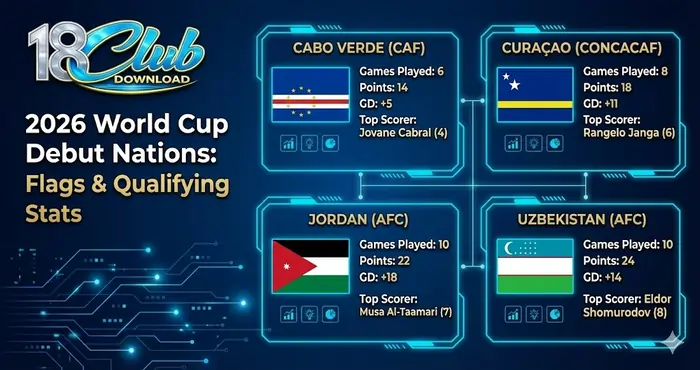
The World Cup 2026 debut nations represent a defining moment in global football history. With the expansion of the FIFA World Cup 2026 to 48 teams, the tournament has moved beyond being an exclusive club for traditional giants to become a truly inclusive global festival. This redesigned structure has paved the way for several countries to compete in the FIFA World Cup finals for the first time ever. Four notable nations — Cabo Verde, Curaçao, Jordan, and Uzbekistan — have already secured their places, ensuring that the 23rd edition of the tournament will be remembered for its historic first appearances.
This comprehensive guide explores the journey of these debut nations, their paths to qualification, the tactical diversity they bring to the pitch, and what their presence means for the future of international football.
What Defines a “Debut Nation” in 2026?
A debut nation is a country that has never previously participated in the group stages of a FIFA World Cup finals. While many countries have spent decades in the “perpetual qualifier” phase—consistently reaching the final rounds of their confederation’s playoffs but falling just short—the 2026 expansion has finally broken that glass ceiling.
The shift from 32 to 48 teams isn’t just about adding more matches; it’s about providing a platform for growth. By increasing the field, the FIFA Council has allowed for a broader representation of footballing cultures, styles, and narratives. For these newcomers, the World Cup 2026 debut nations status is a badge of honor, representing years of grassroots investment and national ambition.
Detailed Profiles: The Four Pioneers of 2026
1. Cabo Verde (Africa/CAF)
Cabo Verde (Cape Verde) has authored perhaps the most inspiring story in African football history. An island nation with a population of just over 500,000, it has consistently punched above its weight in the Africa Cup of Nations (AFCON), but the World Cup remained elusive until now.
- The Path to Glory: Cabo Verde secured their historic berth by topping a highly competitive African qualifying group. The defining moment came in a decisive 3-0 victory over Eswatini, a match that sparked nationwide celebrations. They are currently celebrating their historic qualification as a “small country with a big heart.”
- The “Small Giant” Factor: Cabo Verde becomes one of the smallest nations ever to qualify for a World Cup, trailing only Iceland (2018). Their success is a testament to the “Blue Sharks'” ability to integrate European-based talent with local hunger.
- Tactical Identity: Expect a fast-paced, transition-heavy style of play that relies on the technical agility of their wingers. They are set to face Spain in Atlanta on June 15, 2026.
2. Curaçao (Caribbean/CONCACAF)
Curaçao’s qualification is a landmark for Caribbean football. While the region has seen representatives like Jamaica and Trinidad & Tobago in the past, Curaçao’s rise has been a steady, decade-long project.
- Qualification Mastery: Under a succession of high-profile coaching staffs, the Curaçao Football Federation topped their group in the third round of CONCACAF qualifiers. Their technical proficiency allowed them to navigate the tricky fixtures of the Caribbean.
- A New Era for the Island: For a nation often associated with baseball excellence, this footballing breakthrough marks a cultural shift. Their presence in North America—essentially playing in their “backyard”—will draw massive traveling support. They open their campaign against Germany on June 14, 2026, in Houston.
3. Jordan (Asia/AFC)
Jordan’s “The Nashama” (The Brave) have long been a powerhouse in the Middle East, but they finally moved from being “nearly-men” to world-stage competitors for 2026.
- The Winning Campaign: Jordan produced a masterclass in AFC Group B, punctuated by a dominant 3-0 victory over Oman. By securing a second-place finish, they booked a direct ticket.
- Rising Momentum: Following their historic run to the AFC Asian Cup final, Jordan enters the 2026 tournament with more confidence than ever. Their FIFA World Ranking has seen a significant jump recently. They will face Algeria on June 22, 2026, at Levi’s Stadium.
4. Uzbekistan (Central Asia/AFC)
Uzbekistan making history as the first Central Asian nation to qualify for a World Cup is a geopolitical and sporting milestone. For years, the “White Wolves” were considered the best team in Asia never to have qualified.
- Breaking the Curse: Consistent performances in the AFC qualifying rounds saw them finish second in Group A. Their success is built on elite youth academies producing some of Asia’s most technical midfielders.
- Regional Impact: Uzbekistan’s qualification is expected to trigger a footballing boom across Central Asia. They are scheduled for a massive clash against Colombia in Mexico City on June 17, 2026.
The Strategic Importance of Debut Nations
The inclusion of these World Cup 2026 debut nations isn’t just a feel-good story; it has tangible impacts on the tournament’s competitive and commercial ecosystem.
Broader Geographic Representation
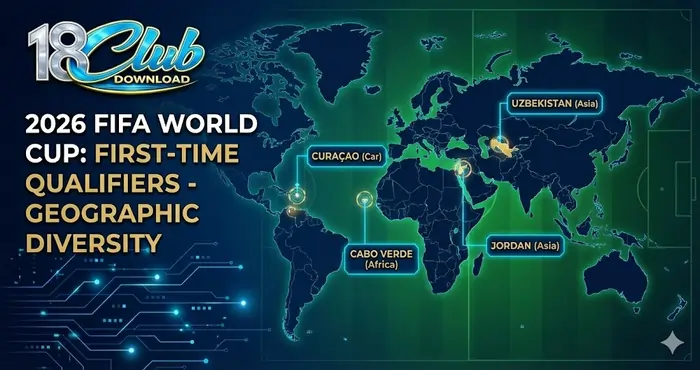
Football is often criticized for being Euro-centric. The presence of teams from the Atlantic islands, the Caribbean, the Levant, and Central Asia proves that the World Cup 2026 new format is achieving true global reach.
Tactical Unpredictability
Established powers often struggle against debutants due to a lack of data. Debut nations often bring unique tactical idiosyncrasies—such as Uzbekistan’s intricate passing or Cabo Verde’s explosive counter-attacks—that can catch traditional giants off guard.
Economic and Social Legacies
For these nations, qualifying is a catalyst for:
- Infrastructure Investment: Governments often fast-track stadium upgrades.
- Youth Inspiration: A generation of children in Amman or Tashkent will now grow up seeing their national flag on the biggest stage.
- Tourism & Branding: The World Cup is the ultimate branding platform. For Cabo Verde or Curaçao, the “free” global advertising during the 104-match schedule is worth billions.
Geographic Spread of 2026 Debutants
| Continent | Debut Nations | Regional Significance |
| Africa | Cabo Verde | Proves population size is no barrier to elite football. |
| Asia | Jordan, Uzbekistan | Signals the end of East/West dominance in Asian football. |
| Caribbean | Curaçao | Re-establishes the Caribbean as a competitive power. |
Historical Context: The Impact of Newcomers
In the 32-team era, debut nations like Senegal (2002) and Iceland (2018) proved first-timers could disrupt the status quo. Senegal’s victory over reigning champions France remains one of the greatest upsets. The 2026 format, with its Round of 32 knockout stage, actually increases the probability of a debut nation reaching the second round.
Competitive Impact: Can They Advance?
While qualification is the first victory, these nations are now focusing on the Round of 32 knockout pathway.
- Scouting Challenges: Traditional powerhouses will find it harder to scout these teams effectively.
- Professional Exposure: Many players from Jordan and Uzbekistan currently play in domestic leagues. The World Cup will be a “shop window” for transfers to top European leagues.
- Fan Engagement: Neutral fans often adopt the “Underdog” as their second team, driving massive social media engagement.
Knowledge Graph: Debut Nations Overview
| Category | Data | Significance |
| Total Confirmed Debutants | 4 (Cabo Verde, Curaçao, Jordan, Uzbekistan) | Represents the “First Wave” of 48-team expansion. |
| Smallest Population | Cabo Verde (~525,000) | Proves the scalability of the FIFA development model. |
| First-Time Regions | Central Asia (Uzbekistan) | Opens a new frontier for broadcasting and sponsorship. |
| Qualifying Win Rate | >65% for most debutants | Shows these teams qualified on merit. |
Conclusion: Celebrating a New Era
The World Cup 2026 debut nations are the true ambassadors of the philosophy: “Football for Everyone.” From the islands of the Atlantic to the historic Silk Road, these teams bring a fresh spirit to the game. Their journeys represent the triumph of long-term planning and national pride.
As we look toward the legendary kickoff on June 11, the world won’t just be watching Brazil or Germany. We will be watching Cabo Verde’s “Blue Sharks” and Uzbekistan’s “White Wolves” as they write their names into the history books. For more updates on World Cup teams and tactics, stay tuned to our ongoing coverage.