
Table of Contents
The World Cup 2026 opening match represents the definitive starting point for the most ambitious project in the history of international sports. Scheduled for June 11, 2026, in the heart of Mexico City, this match serves as the gateway to a revolutionary tournament featuring 48 nations and 104 total fixtures. For the first time, three sovereign nations—the United States, Mexico, and Canada—will unite to host the globe, but the honor of the very first whistle belongs to Mexico.
This grand opener is more than a mere 90-minute game. It is a high-definition global spectacle that bridges the sacred traditions of the “Beautiful Game” with the cutting-edge demands of the 21st-century sporting industry. In this definitive guide, we explore every facet of the FIFA World Cup 2026 opening match—from the tactical nuances of the Mexico vs. South Africa rematch to the architectural soul of the Estadio Azteca.
What Is the World Cup 2026 Opening Match?
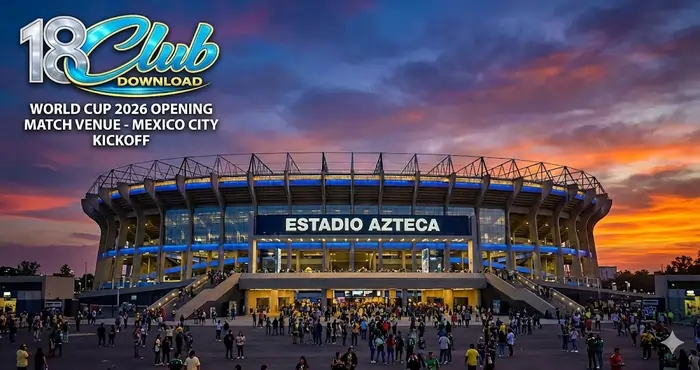
The World Cup 2026 opening match is the ceremonial and competitive ignition of the tournament. It is the moment when years of logistical planning, stadium construction, and qualifying drama finally transition into active play. FIFA recently confirmed that the honor of hosting the opener has been bestowed upon Mexico City, specifically at the legendary Estadio Azteca.
This match carries a heavy narrative weight: it is a historic rematch. Host nation Mexico will face South Africa, reviving a rivalry that began during the opening game of the 2010 World Cup. That day in Johannesburg, the match ended in a 1–1 stalemate. In 2026, the roles are reversed. Mexico, playing in front of a home crowd of nearly 90,000 fans, is desperate to secure their first-ever victory in a World Cup opening match. For a deeper look at the 104-match schedule and brackets, explore our comprehensive tournament map.
Venue and Host City: The Soul of Estadio Azteca
A Historic Football Cathedral
Often referred to as the “Cathedral of Football,” Estadio Azteca (rebranded as Estadio Banorte for commercial purposes during the 2026 cycle) is a venue unlike any other. By hosting the World Cup 2026 opening match, it achieves a feat no other stadium can claim: hosting three separate World Cup openers (1970, 1986, and 2026).
The stadium is a concrete monument to footballing immortality. It was on this turf that Pelé was carried off on shoulders after winning his third title in 1970, and where Diego Maradona scored both the “Goal of the Century” and the “Hand of God” in 1986. The decision to return to the Azteca for the 2026 kickoff is a nod to the sport’s heritage in a tournament that otherwise looks toward the future.
| Feature | Detailed Specification |
| Stadium Name | Estadio Azteca (Official: Estadio Banorte for 2026) |
| City | Mexico City, Mexico |
| Capacity | Approximately 87,523 seats |
| Altitude | 2,200 meters (7,200 feet) above sea level |
| Legacy | Site of the “Hand of God” and Pelé’s final World Cup triumph |
The Tactical Challenge of Altitude
The altitude of Mexico City provides a unique tactical challenge that often catches uninitiated teams off guard. At 2,200 meters, the air is significantly thinner than at sea level. This has two primary effects:
- Ball Aerodynamics: The ball travels significantly faster and has less “drag,” making long-range shots and crosses harder for goalkeepers to judge.
- Player Physiology: Oxygen saturation is lower, meaning players tire faster and recovery periods during the match are longer. For South Africa, arriving early to acclimatize to the thin air of the Valley of Mexico will be a critical part of their World Cup 2026 preparation.
Renovations and Modernization
Despite its legendary status, the stadium required massive upgrades to meet official FIFA host city standards. While there were early reports of renovation delays, the stadium has undergone a $150 million face-lift. Improvements include:
- Hybrid Pitch Technology: A state-of-the-art combination of natural grass and synthetic fibers ensuring the pitch remains pristine throughout the five scheduled matches.
- Luxury Hospitality: A complete overhaul of the “Palcos” (boxes) to meet the premium requirements of global sponsors and VIPs.
- Connectivity: A new high-density Wi-Fi 7 network allowing 90,000 fans to share the grand opener experience in real-time.
- Sustainability: Installation of solar panels and a new rainwater harvesting system to align with FIFA’s environmental strategy.
Opening Match Schedule and Global Timing
The timing of the World Cup 2026 opening match is a masterpiece of broadcasting coordination.
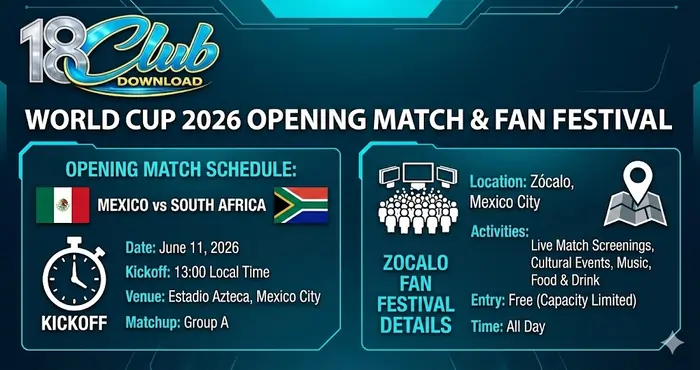
- Date: Thursday, June 11, 2026
- Venue: Estadio Azteca, Mexico City
- Kickoff Time: 13:00 Local Time
- Eastern Time (USA/Canada): 15:00
- South African Standard Time: 21:00
By kicking off in the early afternoon in Mexico City, FIFA ensures the match is viewed during “Prime Time” in Europe and late evening in Africa, while anchoring the afternoon sports block in North America. For real-time updates and expert World Cup betting tips, check our live match-day portal.
Tactical Preview: Mexico vs. South Africa Rematch
The Mexican Ambition: Breaking the “Opening Match Curse”
For El Tri, the opening match is more than a game—it is a national duty. Led by veteran manager Javier Aguirre and legendary assistant Rafael Márquez, Mexico is deploying a tactical system built on high-intensity pressing and quick transitions.
Márquez, who scored the equalizer in the 2010 opener, is reportedly focusing on “defensive discipline” to ensure Mexico doesn’t concede early under the weight of expectation. Their current FIFA World Ranking suggests they are favorites, but the internal pressure of 87,000 screaming fans can be a double-edged sword. Fans should look for the influence of young starlets who have flourished in European leagues over the last cycle.
The South African Resurgence: Bafana Bafana’s Speed
South Africa enters 2026 as one of the most exciting teams in the CAF confederation. Following a strong showing in the Africa Cup of Nations, they have developed a reputation for clinical finishing. Their tactical setup relies on blistering speed on the wings to exploit high defensive lines—a strategy that might be particularly effective given the faster ball speeds at the Azteca’s altitude. Their preparation has been flawless, with warm-up matches confirmed against high-tier opponents to test their conditioning.
Historical Context: The Power of the World Cup Opener
The opening match defines the narrative of the entire tournament. History is filled with host-nation drama that often dictates the atmospheric “temperature” of the following weeks:
- 2010 (South Africa 1-1 Mexico): Remembered for Siphiwe Tshabalala’s thunderous opening goal and the deafening buzz of vuvuzelas.
- 2014 (Brazil 3-1 Croatia): A match that highlighted Neymar’s brilliance but also foreshadowed Brazil’s defensive fragilities.
- 2018 (Russia 5-0 Saudi Arabia): A dominant display that silenced critics and ignited a summer of unexpected Russian success.
- 2022 (Qatar 0-2 Ecuador): The historic first time a host nation lost their opening fixture, setting a somber tone for the local campaign.
In 2026, the World Cup 2026 opening match returns to a “neutrality” of spirit by being held in a footballing shrine that has seen it all. It is a bridge between the legends of the past and the superstars of the 48-team future. Explore our World Cup history archives for a deeper look at tournament legends.
Economic, Social, and Cultural Impact
The World Cup 2026 opening match is an economic engine of unprecedented scale for Mexico. It is projected to attract over 500,000 international visitors to Mexico City alone during the opening week of the tournament.
Tourism and Local Economy
The city’s hotel occupancy is already reaching record highs. This influx of fans provides a massive boost to:
- Hospitality: Local restaurants, particularly in the historic center and the Gastronomic zones of Polanco, are preparing for 24-hour service.
- Transport: Mexico City has invested heavily in “World Cup Transit Lanes” and dedicated World Cup fan shuttles to ferry supporters between the Zócalo and the stadium.
- Job Creation: Thousands of roles in stadium security, event management, and “City Ambassadors” have been created to guide the global influx of supporters.
Fan Engagement and Festivities
The Zócalo, Mexico City’s historic central square, will host the flagship FIFA Fan Festival. This public viewing area will feature giant screens, live music, and cultural exhibitions from all 48 participating nations, ensuring that those without stadium tickets can still feel the ground-shaking roar of the grand opener.
Beyond Mexico City: The Opening Weekend
While the eyes of the world are on Mexico City for the grand opener, the World Cup 2026 structure ensures a staggered rollout for the other host nations.
- Friday, June 12, 2026: The focus shifts north as Canada opens their campaign in Toronto and the United States plays their first match in Los Angeles.
- Saturday, June 13, 2026: Seven more group stage matches across various time zones, officially beginning the “104-match marathon.”
Conclusion: The Dawn of a New Era
The World Cup 2026 opening match is the heartbeat of a new global era. It represents the unification of the North American continent and the expansion of the sport to 48 teams. When Mexico and South Africa step onto the hallowed turf of the Estadio Azteca on June 11, 2026, they aren’t just playing for three points—they are serving as the heralds for the greatest sporting festival in human history.
For the most comprehensive World Cup 2026 predictions and analysis, stay tuned to our ongoing coverage as we count down to the greatest kickoff in sports history.