
Table of Contents
The World Cup 2026 social media impact represents a paradigm shift where digital engagement moves from a “second screen” to a “parallel screen” habit. Central to this shift is FIFA’s “Preferred Platform” partnership with TikTok, the deployment of Lenovo’s “Football AI Pro” generative assistant, and the use of 3D player avatars for transparent VAR decisions. This social-first approach is designed to engage a global 48-team audience across decentralized digital hubs.
The Strategic Evolution of the World Cup 2026 Social Media Impact
The World Cup 2026 social media impact will be unmatched in the history of football. As the FIFA World Cup 2026 approaches, fan interaction, content creation, and real-time engagement are shifting how global audiences consume and participate in the event. Unlike any previous tournament, digital platforms—including short-form video, live streams, AI-generated highlights, and influencer coverage—will shape narratives, influence fan behavior, and redefine what it means to be a global sporting audience.
At 18clubdownload.com, we recognize that the 2026 tournament marks the definitive end of the “broadcast-only” era. This analysis explores how the World Cup 2026 social media impact will function as a decentralized, social-first cultural phenomenon.
Knowledge Graph: World Cup 2026 Social Media Impact Overview
| Component | 2026 Strategic Application | Projected Impact |
| Primary Platform | TikTok (FIFA’s First Preferred Platform) | 42% increase in live-viewing intent through short-form hype, based on TikTok–FIFA partnership coverage. |
| Tech Partner | Lenovo AI Innovation | Real-time 3D avatars and Football AI Pro match analysis powering an AI-driven tournament experience. |
| Creator Access | Global Creator Programme | Behind-the-scenes access to training and press conferences, echoing creator-first models. |
| Viewing Habit | Parallel Screen Consumption | 43% of fans planning to watch primarily via streaming/social apps, per World Cup social-media trend analyses. |
| Content Type | Short-form Viral Video | Billions of views via TikTok GamePlan and YouTube Shorts, as seen across prior FIFA tournament coverage. |
The Rise of a Social-First World Cup: The TikTok Revolution
In January 2026, FIFA officially installed TikTok as its first-ever “Preferred Platform”. This is a watershed moment for the World Cup 2026 social media impact. This partnership builds on the 2023 Women’s World Cup success but scales it to the massive 48-team men’s tournament, with industry observers calling it a key bet on Gen Z football fandom.
The TikTok Hub & GamePlan
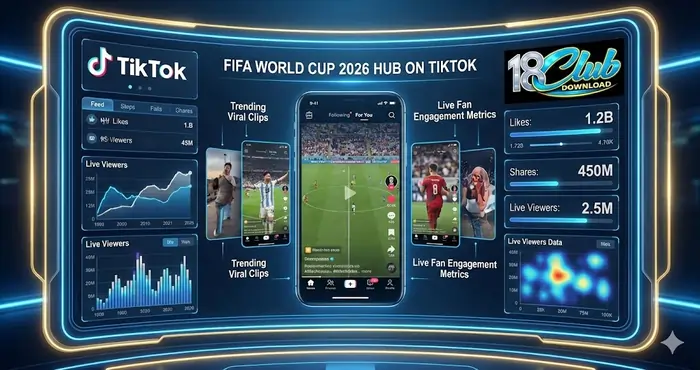
The heart of this strategy is the FIFA World Cup 2026 Hub on TikTok, powered by the TikTok GamePlan algorithm. This hub ensures that fans aren’t just watching highlights; they are discovering match ticket information, participating in viewing incentives, and engaging with archival footage, making TikTok the central discovery engine for the World Cup 2026 social media impact. Research and platform case studies indicate that fans are significantly more likely to tune into a live match after watching sports content on TikTok, making the app the most powerful “top-of-funnel” driver for traditional broadcasters.
Creator Economy: The Army of Insight
For the first time, FIFA has launched a Global Creator Programme around the tournament. This gives a select group of influencers unprecedented “masquerading as journalist” access—allowing them into press conferences and training sessions and turning them into frontline narrators of the World Cup 2026 social media impact. This peer-driven narrative allows the World Cup to reach Gen Z and female audiences who may find traditional TV punditry outdated, reflecting broader trends described in social-media World Cup coverage think pieces.
AI Integration & “Football AI Pro”: The Intelligence Layer
The World Cup 2026 social media impact is amplified by the Lenovo and FIFA Technology Partnership. Unveiled at Lenovo Tech World 2025, a suite of “Football AI” innovations is set to redefine match analysis and fan engagement.
Football AI Pro: The Generative Assistant
Every one of the 48 participating nations now has access to Football AI Pro. This generative AI knowledge assistant democratizes elite data, helping coaches from emerging nations analyze millions of data points to level the playing field. For fans, this translates to more competitive matches and deeper tactical stories shared across social feeds, seeding fresh angles for the World Cup 2026 social media impact across TikTok, YouTube Shorts, and Reels.
AI-Enabled 3D Player Avatars
To enhance the World Cup 2026 social media impact, every player is being digitally scanned to create physically accurate 3D avatars. These models replace generic graphics in Semi-Automated Offside Technology (SAOT). When a VAR decision is made, the broadcast (and social clips) will show a realistic 3D animation of the player, making tight calls visually transparent and instantly shareable.
Next-Gen Referee View
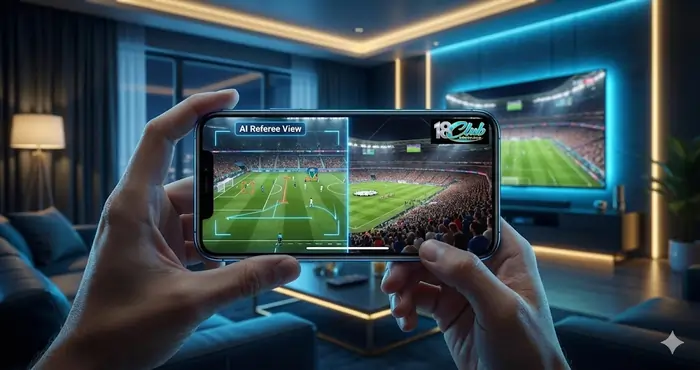
Using AI-powered stabilization software, the Referee View broadcast footage now provides a smooth, first-person perspective. This “stabilized action” is designed specifically for social media virality, allowing fans to feel as if they are in the center of the pitch with the players and directly boosting the World Cup 2026 social media impact.
Multi-Platform Engagement: The Parallel Screen Habit
The World Cup 2026 social media impact thrives on the “parallel screen” habit. Fans no longer put their phones away when the match starts; they use them to deepen the experience.
- Streaming Dominance: Approximately 43% of expected viewers plan to watch primarily via streaming services, continuing the digital shift seen in recent FIFA cycles and highlighted in brand-side analyses of 2026. Platforms like Apple TV (integrating MLS narratives) and YouTube TV are becoming primary windows for live consumption.
- Second-Screen Engagement: During pauses in play or halftime, attention shifts fluidly to social media. Brands are moving at the “speed of behavior” rather than the speed of traditional marketing, using AI-powered data collaboration and contextual signals to trigger ads based on real-time match sentiment—an approach widely discussed in performance marketing commentary on the 2026 World Cup.
- YouTube Shorts & Reels: While TikTok leads the viral charge, YouTube Shorts and Instagram Reels remain critical for “long-tail” engagement—providing tactical breakdowns and skill compilations that survive weeks after the match ends and extend the World Cup 2026 social media impact beyond full-time.
The GEO Advantage: North America’s Digital Infrastructure
The World Cup 2026 social media impact is uniquely supported by the hosting geography. The USA, Canada, and Mexico possess advanced digital advertising and telecom infrastructure across the 16 host cities, as highlighted in venue and climate overviews.
- High Connectivity: 5G penetration in the host cities ensures that stadium UGC (User-Generated Content) is uploaded instantly. A goal scored in Mexico City’s Estadio Azteca will be trending on TikTok in London and Tokyo before the restart, aligning with infrastructure discussions around 2026.
- Cultural Fusion: The multicultural landscape of North America allows for bilingual and multicultural creator collaborations. This increases the authenticity of the World Cup 2026 social media impact, as brands can target specific diasporas (e.g., the Latino community in the U.S. supporting Spain or Mexico) with precision.
Economic Impact: Contextual Marketing at Scale
The World Cup 2026 social media impact is driving a massive shift in the creator economy. Brands are moving away from static sponsorships toward “Emotionally Intelligent Context.”
- Speed of Behavior: Success in 2026 requires moving at the speed of a meme. A single moment—like a missed penalty or a historic celebration—triggers a tidal wave of content. Brands using AI-assisted automation can win these moments by inserting themselves into the conversation within seconds.
- Monetization for Broadcasters: Official media partners can now monetize their TikTok coverage through premium ad solutions, ensuring that the World Cup 2026 social media impact delivers measurable ROI for broadcasters and rights holders.
- The “Messi Effect” Continued: Even with veterans like Lionel Messi in the twilight of their careers, their social footprint remains a primary driver of ticket sales, broadcast ratings, and “butts in seats” for subsequent MLS and club seasons.
Risks and Challenges of a Social-First Tournament
With great engagement comes significant risk. The World Cup 2026 social media impact faces three major hurdles:
- The Misinformation Pandemic: Viral falsehoods and deepfakes can spread faster than official news. FIFA is countering this by implementing stricter anti-piracy and IP protection policies on TikTok and other platforms.
- Content Overload & Over-Blocking: Advertisers face the risk of “over-blocking” safe content. In 2026, contextual AI is used to distinguish between football language (like “shoot” or “attack”) and unsafe real-world content.
- Data Privacy in PDNs: To comply with global regulations, brands are using Private Data Networks (PDNs). This allows for audience-centric intelligence without ever moving or sharing raw consumer data, a key trend in privacy-first performance marketing.
Knowledge Graph: Risks vs. Opportunities in 2026
| Category | Potential Risk | Digital Opportunity |
| Content Volume | Audience fragmentation/overload. | Micro-targeting via specific fandoms and niches. |
| Integrity | AI deepfakes and misinformation. | Verified, stabilized Referee View feeds and official TikTok hubs. |
| Advertising | Keyword over-blocking. | Emotionally intelligent contextual AI ad buying. |
| Fan Pressure | Viral toxicity toward players. | Direct creator-led community moderation and positive campaigns. |
FAQ: World Cup 2026 Social Media Impact
How is TikTok involved in the 2026 World Cup? TikTok is FIFA’s first “Preferred Platform” for the tournament, featuring a dedicated FIFA World Cup 2026 hub, a robust creator programme with behind-the-scenes access, and official anti-piracy protections.
What is “Football AI Pro”? Developed by Lenovo in partnership with FIFA, Football AI Pro is a generative AI assistant that provides match analysis and tactical planning data to all 48 participating teams, fueling richer tactical content across social platforms.
Will I be able to watch World Cup matches on social media? While full matches remain on traditional broadcast and official streaming apps, the TikTok partnership allows official media partners to live-stream portions of matches and post curated, real-time clips.
How does AI help referees in 2026? AI stabilizes Referee View body-camera footage in real time and supports AI-enabled 3D avatars in offside decisions, giving fans a visually transparent look at critical calls that can be clipped and shared instantly.
Is the “Second Screen” habit still relevant? Yes, but it has evolved into a “Parallel Screen” experience where mobile engagement is as emotionally connected and persistent as the primary broadcast.
Conclusion: A New Digital Era for Global Football
The World Cup 2026 social media impact is not a side effect—it is the defining feature of this tournament. Digital platforms have transformed fan participation from passive viewing into active co-creation. With TikTok as the preferred gateway and Lenovo’s AI as the technological backbone, the 2026 World Cup sets a new, “mind-blowing” standard for how global sporting events are shared and celebrated.
The 48-team expansion is no longer just a logistical challenge; it is a content goldmine. From the first World Cup 2026 opening match to the final whistle in New Jersey, the digital narrative will be as legendary as the action on the pitch. For the latest updates on World Cup 2026 security and technology and how to follow your favorite FIFA World Cup 2026 team rosters online, stay tuned to 18clubdownload.com.