
Table of Contents
The World Cup 2026 Tourism Effects represent a paradigm shift in the global sports-travel landscape. As of February 2026, with the opening match at the Estadio Azteca just months away, the scale of this 48-team, 104-match marathon is redefining economic expectations. Spanning three nations—the United States, Canada, and Mexico—this tournament is the single largest mobilization of international and domestic tourists in history.
For travel professionals and regional planners, navigating the World Cup 2026 Tourism Effects requires an elite-level understanding of the logistical and economic surge already hitting host cities. This framework to dissect the multi-layered impact of the “Greatest Show on Earth.”
Strategic Scale: The $30 Billion Economic Ripple
The most immediate of the World Cup 2026 Tourism Effects is the staggering economic output projected for the host regions. Unlike previous editions, the 2026 cycle leverages the sheer mass of North America, creating a “multiplier effect” that traditional single-host models cannot match.
1. Direct Visitor Spending Projections
According to recent pre-event economic impact analyses, matches hosted in the United States alone are projected to generate $556 million in total event-related visitor spending. This surge is highly concentrated in specific hubs where stadium capacity and air access align.
Top Spending Hubs in the US:
- East Rutherford (MetLife Stadium): Projected $67 million in visitor spend.
- Inglewood (SoFi Stadium): Projected $59 million.
- Arlington (AT&T Stadium): Projected $58 million.
- Atlanta (Mercedes-Benz Stadium): Projected $52 million.
- Seattle (Lumen Field): Projected $51 million.
2. The Visitor Influx: International vs. Incremental
The United States expects 1.24 million international visitors specifically for the tournament. Crucially, 60% of these arrivals are considered “incremental”—trips that would not have occurred without the World Cup. This massive influx is the primary engine behind the World Cup 2026 Tourism Effects seen in the retail and food & beverage (F&B) sectors, which account for a combined 50% of total visitor spending.
Hospitality Infrastructure: The RevPAR Revolution
One of the most visible World Cup 2026 Tourism Effects is the total restructuring of the hospitality industry. As we reach the peak booking window, hotel inventory in host cities is being managed with unprecedented surgical precision.
1. Average Daily Rate (ADR) and Occupancy Surge
Hoteliers across North America are experiencing a demand spike that has effectively detached room rates from standard seasonal cycles.
- The “Final Match” Premium: New York/New Jersey, as the host of the final, currently commands an average nightly rate of $624 during the final week.
- Regional Volatility: Mexico City recorded a staggering 961% increase in hotel prices around its opening matches, while cities like Vancouver have seen rates hit an average of $1,013 per night.
- Stability Markets: Houston and Atlanta remain the most affordable options, with Houston averaging approximately $225 per night, providing a strategic choice for budget-conscious fans following their World Cup 2026 team rosters through the group stages.
2. Alternative Lodging and the “Airbnb Safety Valve”
The World Cup 2026 Tourism Effects have forced a reliance on the short-term rental market. In Kansas City and Dallas, the occupancy “on-the-books” indicates that traditional hotels cannot meet the demand, leading to a surge in private rentals and “Fan Villages.”

The “Corridor” Logic: Transforming Fan Mobility
The geographic distribution of the 2026 tournament has led to the creation of “Travel Corridors.” This is a key element of the World Cup 2026 Tourism Effects, as it shifts the focus from single-city stays to multi-national itineraries.
1. Regional Hubs and Base Camps
FIFA’s regionalized hub model has led to some unexpected tourism booms in non-host cities. For example, Algeria has snapped up a base camp in Lawrence, Kansas, while the Netherlands and Argentina have settled in the Kansas City region. This spreads the World Cup 2026 Tourism Effects into college towns and suburban areas that would otherwise miss the primary economic windfall.
2. Transportation Overhauls
The World Cup 2026 Tourism Effects on transport have accelerated decades of infrastructure work.
- Atlanta (MARTA): Undergoing its largest capital improvement plan in history, including new railcars and station enhancements.
- Mexico City Mobility: Investing in new trolleybus and light rail lines to increase access to Estadio Azteca.
- Kansas City (KC2026): Highlighted federal funding of $79 million for security and transportation projects to ensure a seamless fan experience during World Cup 2026 warm-up matches.
AI and Digital Transformation: The Smart Tourism Era
The World Cup 2026 Tourism Effects are the first to be fully “AI-optimized.” This digital layer reduces “travel friction” and allows fans to navigate three countries with a single interface.
1. Football AI Pro and Personalized Travel
Through the FIFA-Lenovo Partnership, fans now have access to “Football AI Pro,” a generative knowledge assistant that handles real-time flight re-bookings and cultural itineraries.
2. Smart Wayfinding and Crowds
AI is being used to manage one of the most difficult World Cup 2026 Tourism Effects: overcrowding. Using predictive analytics, host cities can forecast crowd densities at Fan Fests, such as the 2.2 million visitors expected at Mexico City’s Zócalo, and reroute tourists to less congested areas.
Sustainability: Balancing Growth with Environmental Risk
The World Cup 2026 Tourism Effects include a massive environmental footprint that stakeholders are working to mitigate through green tourism practices.
1. The Carbon Footprint of the 48-Team Era
Expanding to 48 teams has naturally increased air travel. Analysts estimate the tournament will generate 9.02 million tonnes of CO2 emissions—nearly double the average of previous editions.
- Air Travel: Accounts for 85% of total emissions.
- Climate Risks: Eight stadiums are flagged for high-priority heat stress mitigation, with Monterrey and Dallas facing particularly extreme summer temperatures.
Knowledge Graph: Multi-Dimensional Impacts of 2026 Tourism
| Category | Tactical Implementation | Long-Term World Cup 2026 Tourism Effects |
| Economic | $556M Direct US Visitor Spend | Permanent GDP growth and increased luxury demand. |
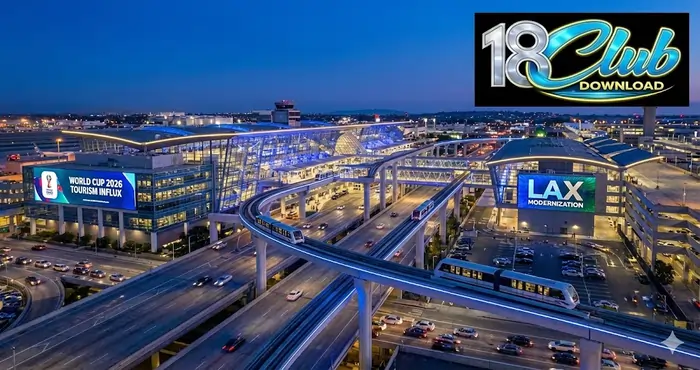
| Logistical | Regional Clusters & Corridor Hubs | Modernized rail and airport infrastructure (LAX, MARTA). |
| Technological | Football AI Pro & VR | Blueprint for future “smart-city” mega-events. |
| Environmental | Zero-Waste & Electromobility | Accelerated adoption of sustainable public transit. |
| Employment | 185,000+ FTE Jobs (US) | A globally trained hospitality workforce. |
FAQ: Mastering the World Cup 2026 Tourism Effects
How much will the World Cup 2026 Tourism Effects boost the economy?
In the United States, visitor spending is projected at $556 million, while the total GDP contribution across North America could exceed $40.9 billion when including indirect effects and legacy investments.
Which cities are the biggest beneficiaries of the World Cup 2026 Tourism Effects?
East Rutherford (NJ) leads the ranking with $67 million in projected spending, followed closely by Inglewood (CA) and Arlington (TX).
Will hotel prices stay high after the tournament?
While match-day “spikes” are temporary, the improved infrastructure and destination branding resulting from the World Cup 2026 Tourism Effects often lead to a permanent 3-5% increase in baseline room rates.
What is the “Corridor Strategy”?
It is a logistical plan to group matches in Western, Central, and Eastern regions to minimize the 9 million tons of CO2e generated by long-haul air travel.
Are there specific World Cup 2026 Tourism Effects for Mexico and Canada?
Yes. Mexico expects 836,000 tourists and over $1.24 billion in direct city tourism spending, while Canada has seen hotel rates in Vancouver triple as it becomes the tournament’s most expensive destination.
Conclusion: A Legacy of Transformation
The World Cup 2026 Tourism Effects will redefine North America as a premier global destination for decades. From the $67 million windfall in New Jersey to the AI-driven smart transit systems in Atlanta and Mexico City, the tournament is a masterclass in modern event hosting.
While challenges like price inflation and extreme heat are real, the long-term legacy of upgraded airports, smarter cities, and a robust hospitality workforce will ensure that the 2026 World Cup remains the “gold standard” for sports tourism. At 18clubdownload.com, we remain your trusted source for the data that drives these transformations.
For the latest updates on World Cup 2026 Tourism Effects and to track your favorite World Cup 2026 veterans, continue your journey at 18clubdownload.com.