
Table of Contents
FIFA World Cup 2026 Guide
The FIFA World Cup 2026 promises to be the most expansive and thrilling edition yet, expanding to 48 teams and spanning three North American nations. This guide dives deep into every aspect, from the groundbreaking format to host cities, key dates, qualified teams, and essential tips for fans and players alike.
Tournament Overview and Historical Context
The FIFA World Cup has evolved dramatically since its inception in 1930, growing from 13 teams to the unprecedented 48-team spectacle set for 2026. Hosted jointly by the United States, Canada, and Mexico, this tournament marks the first time three countries will co-host, leveraging North America’s soccer infrastructure for 104 matches across 16 state-of-the-art stadiums.
The event runs from June 11 to July 19, 2026, promising unprecedented global viewership expected to surpass the 5 billion mark from 2022 in Qatar.
FIFA’s decision to expand the tournament from 32 to 48 teams was ratified in 2017, aiming to include more nations from diverse confederations while boosting revenue through additional matches. This change increases group stage games from 48 to 72, with knockouts expanding accordingly.
The United States will host the lion’s share—60 matches—including the final at MetLife Stadium in New Jersey. Canada and Mexico each handle 13 matches, with Mexico City’s Estadio Azteca opening the tournament, evoking nostalgia from its 1970 and 1986 editions.
Economically, the tournament is projected to inject billions into host economies, with U.S. cities alone anticipating $556 million in direct spending from visitors. Recent developments include over 500 million ticket applications already submitted, underscoring feverish demand. For fans, this means early planning is crucial, especially with initiatives like Airbnb’s $750 incentives for hosts in host cities to accommodate the influx.
Host Nations and Stadium Details
The tri-nation hosting model distributes games efficiently: the USA leads with 11 cities and 78 matches, Canada features Toronto and Vancouver for 13, and Mexico’s Mexico City, Guadalajara (Zapopan), and Monterrey host the remaining 13. This setup minimizes travel fatigue for teams while maximizing fan access across borders.
United States Host Cities
- Atlanta (Mercedes-Benz Stadium): Capacity 71,000; hosts group matches, round of 16, semifinals.
- Boston (Gillette Stadium): 65,878 capacity; multiple group games.
- Dallas (AT&T Stadium): World’s largest roofed stadium at 80,000+; quarterfinals and group stage.
- Houston (NRG Stadium): 72,220; known for its retractable roof.
- Kansas City (Arrowhead Stadium): 76,416; round of 16.
- Los Angeles (SoFi Stadium): 70,240; opens with a marquee group match.
- Miami (Hard Rock Stadium): 65,326; quarterfinal.
- New York/New Jersey (MetLife Stadium): 82,500; the grand final venue.
- Philadelphia (Lincoln Financial Field): 69,796; round of 16.
- San Francisco Bay Area (Levi’s Stadium): 68,500; group and knockout games.
- Seattle (Lumen Field): 68,740; western hub for groups.
Canada Host Cities
- Toronto (BMO Field, expanded): 45,736 capacity post-renovation; group and round of 32.
- Vancouver (BC Place): 54,500; all group matches indoors.
Mexico Host Cities
- Mexico City (Estadio Azteca): Iconic 87,523-seat venue; opener on June 11.
- Guadalajara (Estadio Akron): 46,850; high-altitude challenges.
- Monterrey (Estadio BBVA): 53,500; modern facilities.
Recent news highlights training base camps, such as Charlotte FC hosting Scotland, emphasizing MLS integration. Stadium renovations, like BMO Field’s expansion, ensure readiness by mid-2026.
Tournament Format Explained
The expanded format revolutionizes World Cup structure: 48 teams form 12 groups of four, a shift from eight groups of four. Each team plays three round-robin matches, totaling 72 group games. Advancement criteria: the top two teams per group (24 teams) plus the eight best third-placed sides (32 total) proceed to a round of 32 knockout—eliminating second-place “safety net” advantages.
This setup rewards consistency, with potential for dramatic third-place battles. Ties in group standings use goal difference, goals scored, head-to-head, then fair play points or playoffs. No more goal-average tiebreakers; it’s modernized for equity.
Knockout progression:
- Round of 32 (June 28–July 3): Single-elimination.
- Round of 16 (July 4–7).
- Quarterfinals (July 10–11).
- Semifinals (July 14–15).
- Third-place match (July 18).
- Final (July 19).
Seeding prioritizes hosts and recent champions, with draws ensuring confederation balance. VAR and semi-automated offside tech will debut fully, enhancing accuracy.
| Stage | Teams | Matches | Dates |
|---|---|---|---|
| Group Stage | 48 | 72 | June 11–27 |
| Round of 32 | 32 | 16 | June 28–July 3 |
| Round of 16 | 16 | 8 | July 4–7 |
| Quarterfinals | 8 | 4 | July 10–11 |
| Semifinals | 4 | 2 | July 14–15 |
| Third-Place | 2 | 1 | July 18 |
| Final | 2 | 1 | July 19 |
Key Dates and Full Schedule Highlights
FIFA released the schedule in February 2024, with tweaks possible post-qualifiers. Opening match: Mexico vs. a non-CONMEBOL/CONCACAF rival at Azteca on June 11. The USA kicks off June 12 at SoFi Stadium, Canada on June 13 in Toronto.
Group Stage Breakdown:
- Matchday 1: June 11–17 (36 games).
- Matchday 2: June 18–24.
- Matchday 3: June 25–28.
Notable fixtures include potential USA-Mexico clashes and Argentina’s title defense. Knockouts ramp up intensity: round of 32 across neutral U.S. venues, semifinals split between Atlanta and Dallas, final at MetLife.
Time zones factor in: East Coast games at 3pm/7pm ET, West Coast earlier, accommodating global audiences. UK kickoffs range from midnight to 5am, per Sky Sports breakdowns.
Qualified Teams and Qualification Process
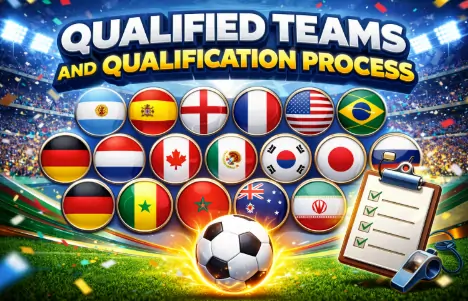
As of February 2026, 27 teams are confirmed, with finals wrapping in March.
Auto-Qualified Hosts: Canada, Mexico, USA.
CONMEBOL (6/6): Argentina, Bolivia, Brazil, Ecuador, Paraguay, Uruguay.
AFC (8/8): Australia, Iran, Japan, Jordan, South Korea, Saudi Arabia, UAE, Uzbekistan.
CAF (9/9): Algeria, Cape Verde, DR Congo, Egypt, Morocco, Nigeria, Senegal, South Africa, Tunisia.
CONCACAF (3/6): Costa Rica, Panama (hosts already in).
OFC (1/1): New Zealand.
UEFA (13 slots filling): England, France, Netherlands, etc., ongoing.
Debutants: Cape Verde, Curaçao, Jordan, Uzbekistan add fresh narratives. Defending champs Argentina lead favorites alongside France, Brazil, England.
Player Perspectives: What Teams Need to Know
For players, acclimatization is key—high altitudes in Mexico (7,200ft Azteca), humidity in Miami/Atlanta, Pacific Northwest chill. FIFA mandates recovery protocols, with base camps finalized (e.g., Scotland in Charlotte). MLS stars like Pulisic, McKennie shine for USA; Canada’s Alphonso Davies headlines.
Training venues span resorts to university facilities, prioritizing pitch quality. Medical teams prepare for 104 games’ injury risks, with concussion protocols tightened.
Fan Guide: Tickets, Travel, and Experiences
Tickets via FIFA.com: general sales ongoing, hospitality packages premium-priced. Expect $100–$1,000+ per match. Travel hubs: Atlanta, LA major airports. Fan zones in non-host cities like Chicago.
Economic perks: $556M U.S. spend boosts hotels, restaurants. Airbnb’s $750 host bonus targets first-timers. Visa waivers for many; ESTA for USA entry.
Safety: Enhanced security post-2022, diverse crowds celebrated. Cultural tie-ins: MLS All-Star games as previews.
Economic Impact and Legacy
Projections: $11B+ global revenue for FIFA, 5M+ visitors. U.S. cities gear up—Dallas adds hotels, Vancouver transit upgrades. Long-term: Soccer’s U.S. surge post-Copa America 2024 positions 2026 as growth catalyst, eyeing 2034 bids.
Sustainability: Carbon-neutral goals, LED stadiums, waste reduction.
Broadcast and Viewing Options
Global: Fox/Telemundo (USA), BBC/ITV (UK), Optus (AUS). Streaming: FIFA+ free highlights. VR experiments for immersive finals.
Fun Facts and Records to Watch
- Most matches: 104, eclipsing Qatar’s 64.
- Largest stadium: Azteca’s 87k roar.
- Triple-host first.
- Potential: First Indigenous winner (OFC slot).
Conclusion: Why 2026 Will Redefine the World Cup
This edition blends innovation, inclusivity, and spectacle. From Azteca’s opener to MetLife’s finale, 2026 cements North America’s soccer stature. Mark calendars—history awaits.